


Common Iron Nails
10D/60D
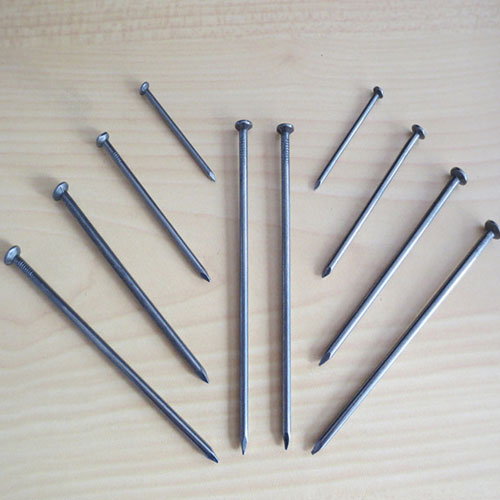
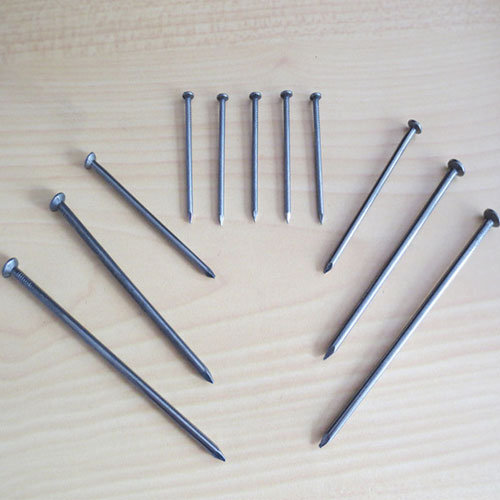
This kind of iron nail is one of the most commonly used, called common nail. The iron nails are produced by low carbon steel, which is widely used in construction, furniture finishing, cabinet work and packaging boxes. The procedure of iron nail production is simply, as drawing ordered wire and punching and cutting into nail.
Quantity
"Common Iron Nails"are a common type of hardware product, usually made of iron material, and are used to fix objects together or connect different components. The following provides a detailed introduction from aspects of their characteristics, application scenarios, and manufacturing processes:
Characteristics
Material: The main component is iron, and it may contain a small amount of impurities such as carbon. Generally speaking, common iron nails have a relatively low carbon content, giving them a certain degree of toughness and hardness to meet general usage requirements.
Specifications: There are various size specifications. Common lengths range from 1 inch to 6 inches, and there are also multiple choices for the diameter, from thinner iron nails used for light-duty work to thicker ones used for heavy-duty construction work.
Application Scenarios
Construction Industry: In construction projects, common iron nails are widely used to fix wood, such as building scaffolding, installing formwork, and making wooden frames. They can also be used to fix gypsum boards to wooden keels and play a role in the connection of some non-load-bearing structures.
Furniture Manufacturing: They are used to assemble furniture components, such as connecting wooden boards to form the frames of tables and chairs, and fixing the side panels and bottom panels of drawers. In the production of some traditional solid wood furniture, common iron nails are also one of the commonly used connecting materials.
Decoration: In home decoration, they can be used to fix decorative trims, such as baseboards and cornices, to make the decoration effect more beautiful. They can also be used to hang decorations like picture frames and mirrors by nailing hooks or hanging rings to the wall.
Daily Life: In daily life, common iron nails also have many uses, such as repairing furniture, making simple handicrafts, and building small storage racks.
Manufacturing Process
Wire Drawing: The original iron block is drawn into an iron wire of the appropriate diameter through a wire drawing machine. This process can make the organizational structure of the iron more compact and improve the strength of the iron nails.
Shaping: The drawn iron wire is cut to the required length, and then one end is processed into a sharp point and the other end into a nail head through stamping or forging processes.
Surface Treatment: In order to prevent the iron nails from rusting, some surface treatments are usually carried out. Common methods include galvanizing, painting, blackening, etc.
Features: Great holding power, bending-resistant
Material: Hard drawn steel wire with Q235 or Q195.
Applications: Construction, packing material, Furniture industry.
 |  |
The standard size of common nail | ||||||
Size | Gauge | Thickness(mm) | Head dia(mm) | Head thickness(mm) | Length(mm) | Tail Length(mm) |
3/4” | 18# | 1.20±0.03 | 3.0±0.1 | 0.8±0.01 | 19±1 | 3.5±0.5 |
1” | 17# | 1.42±0.03 | 3.5±0.1 | 1.0±0.01 | 25±1 | 4.0±0.5 |
1-1/4” | 16# | 1.72±0.03 | 4.0±0.1 | 1.0±0.01 | 32±1 | 4.0±0.5 |
1-1/2” | 15# | 1.92±0.03 | 4.3±0.1 | 1.2±0.01 | 38±1 | 4.0±0.5 |
1-3/4” | 14# | 2.42±0.03 | 4.8±0.1 | 1.5±0.01 | 45±1 | 5.0±0.5 |
2” | 13# | 2.72±0.03 | 5.5±0.1 | 2.0±0.01 | 51±1 | 5.0±0.5 |
2-1/2” | 12# | 3.05±0.03 | 6.0±0.1 | 2.0±0.01 | 64±1 | 5.0±0.5 |
3” | 11# | 3.22±0.03 | 7.05±0.1 | 2.2±0.01 | 76±1 | 5.5±0.5 |
3-1/2” | 10# | 3.75±0.03 | 7.5±0.1 | 2.5±0.01 | 89±1 | 6.5±0.5 |
4” | 8# | 4.02±0.03 | 8.0±0.1 | 2.5±0.01 | 102±1 | 7.5±0.5 |
Special size could be customized | ||||||