

Galvanized Iron Wire vs. Regular Iron Wire: Key Differences Explained
2025-02-10
When choosing between galvanized iron wire and regular iron wire, understanding their differences is crucial for selecting the right material for your project. Both types have distinct properties in terms of corrosion resistance, durability, cost, and applications.
This guide compares galvanized vs. regular iron wire to help you make an informed decision.
1. Coating & Corrosion Resistance
✅ Galvanized Iron Wire
Coated with a protective zinc layer (via hot-dip galvanizing or electroplating).
Highly resistant to rust, moisture, and chemicals—ideal for outdoor or humid environments.
Suitable for marine, agricultural, and industrial applications.
❌ Regular Iron Wire
No protective coating, making it vulnerable to oxidation.
Prone to rust when exposed to moisture, rain, or corrosive substances.
Best for indoor or dry conditions.
2. Durability & Lifespan
✅ Galvanized Iron Wire
Longer lifespan due to zinc shielding the steel core.
Withstands harsh weather, UV exposure, and saltwater corrosion.
Ideal for permanent structures like fences, cages, and construction reinforcements.
❌ Regular Iron Wire
Shorter lifespan, especially in wet or corrosive environments.
May require frequent replacements if used outdoors.
Best for temporary or low-stress applications.
3. Common Applications
✅ Galvanized Iron Wire Uses:
✔ Fencing (chain link, barbed wire, welded mesh)
✔ Marine & coastal structures
✔ Construction (reinforcement, binding)
✔ Agriculture (vineyard trellises, animal cages)
✔ Outdoor projects requiring rust resistance
❌ Regular Iron Wire Uses:
✔ Indoor crafts & DIY projects
✔ Temporary bundling or packaging
✔ Dry-environment applications (no moisture exposure)
4. Cost Comparison
? Galvanized Iron Wire
Higher initial cost due to the galvanizing process.
More cost-effective long-term (less maintenance, fewer replacements).
? Regular Iron Wire
Cheaper upfront but may require additional rust-proofing treatments.
Higher long-term costs if used in corrosive environments.
5. Appearance & Maintenance
? Galvanized Iron Wire
Shiny or matte silver-gray finish (varies by galvanizing method).
Low maintenance—does not require painting or sealing.
? Regular Iron Wire
Metallic gray, but develops reddish-brown rust over time.
Needs regular maintenance (painting, oiling) to prevent corrosion.
Which One Should You Choose?
✔ Choose Galvanized Iron Wire If:
You need long-term durability in outdoor, humid, or corrosive environments.
Your project requires minimal maintenance (e.g., fencing, marine applications).
You prefer higher upfront cost but lower lifetime expenses.
✔ Choose Regular Iron Wire If:
Your application is indoor, temporary, or in a dry environment.
You need a budget-friendly option for short-term use.
You can apply additional rust protection (paint, oil) as needed.
Final Verdict
| Feature | Galvanized Iron Wire | Regular Iron Wire |
|---|---|---|
| Corrosion Resistance | ✅ Excellent | ❌ Poor |
| Durability | ✅ Long-lasting | ❌ Short-term |
| Best For | Outdoor, marine, construction | Indoor, crafts, temporary use |
| Maintenance | Low | High (needs rust protection) |
| Cost | Higher initial, lower long-term | Lower initial, higher long-term |
Conclusion:
Galvanized iron wire is the best choice for outdoor, industrial, and high-moisture applications due to its rust resistance.
Regular iron wire is a cost-effective solution for indoor or short-term projects where corrosion is not a concern.
Need high-quality galvanized or regular iron wire? Contact us today for competitive pricing and expert recommendations!
Black Annealed Wire Applications
Application of Wire Mesh
Related Article

15.5-gauge barbed wire is a mid-range thickness barbed wire primarily used for agricultural and perimeter fencing where a good balance of strength, durability, and cost is needed.
What is 15.5 gauge barbed wire used for?
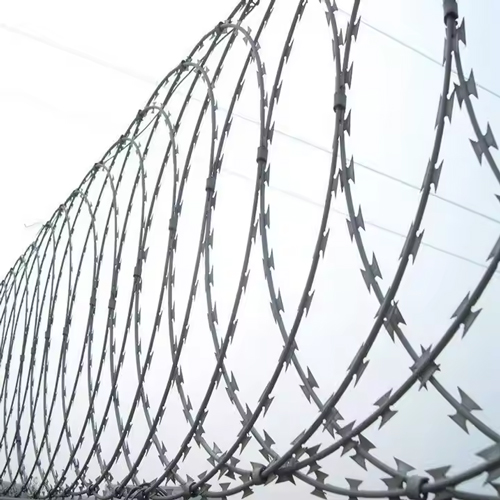
Concertina Wire: A New-Type Protection Mesh Combining Beauty, Practicality, and Strong Anti-Intrusion Performance
Concertina Wire: A Solid Barrier for Modern Security Protection

Stainless steel wire mesh comes in various weaving methods, with plain weave and twill weave being the most common. These two types exhibit distinct differences in wear resistance during use:
What Are the Differences in Wear Resistance Between Plain Weave and Twill Weave Stainless Steel Wire Mesh?